

Nickel Alloy Manufacturing from Melting to Finished Products
Our Jiangsu manufacturing base supports nickel alloys and specialty alloys through controlled melting, forging, heat treatment, finishing, testing and export preparation.
Process Control Across the Critical Steps.
For most alloy materials, our melting route uses VIM + ESR to support cleaner material and consistent chemistry. Additional refining routes are used where appropriate to meet specified alloy requirements. Forging and heat treatment are supported in-house, while qualified processing partners are used where required for selected operations such as hot rolling.
Three systems, three clearly matched equipment photos.
The capacity figures and photographs below refer to the actual VIM, ESR and AOD systems. This replaces the previous mixed process-photo presentation.
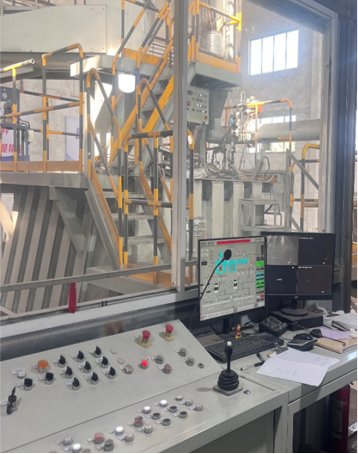
VIM
Vacuum Induction Melting for controlled alloy chemistry and clean melting of demanding nickel and specialty alloy grades.
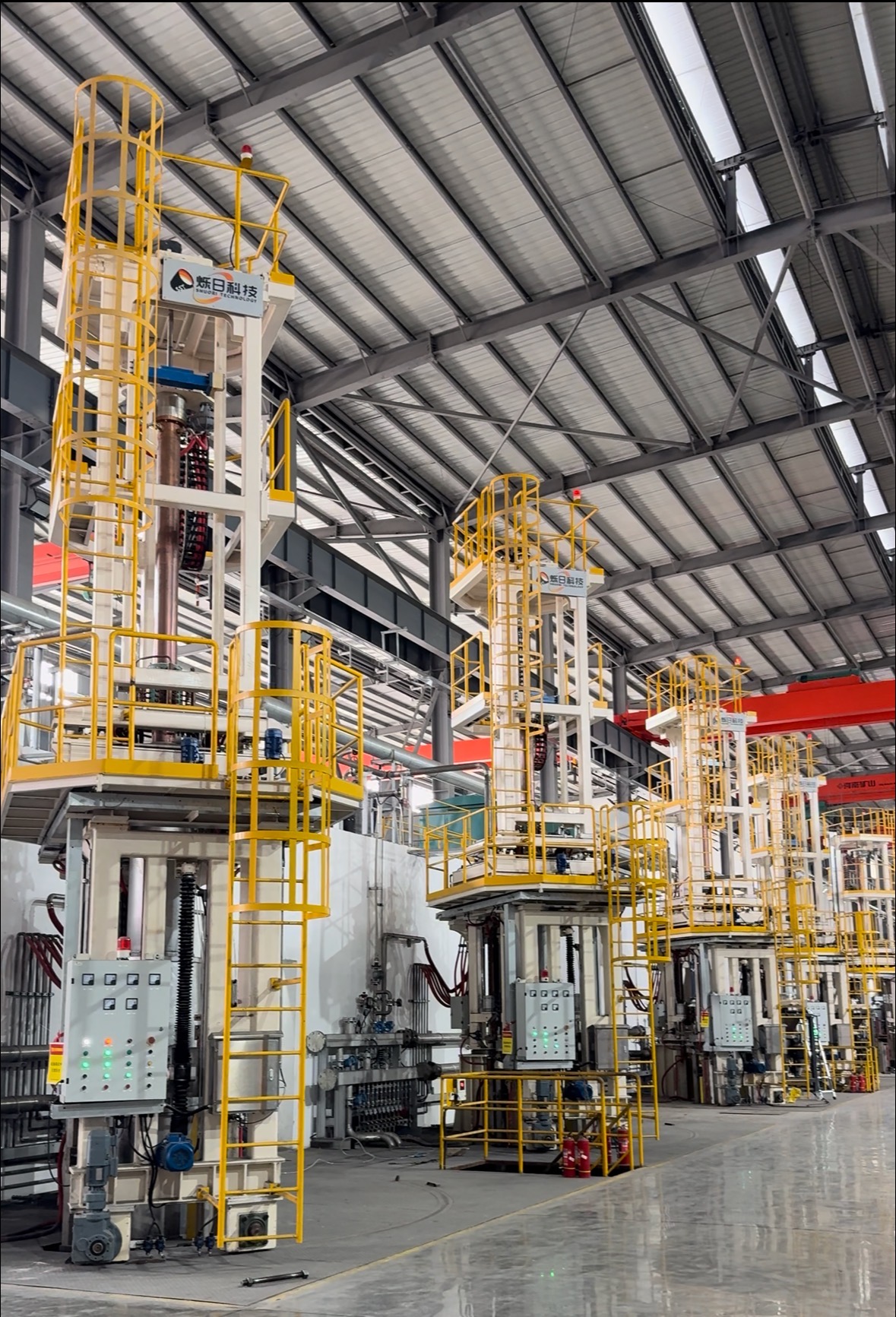
ESR
Electroslag Remelting for improved material cleanliness, internal quality and consistency after primary melting.
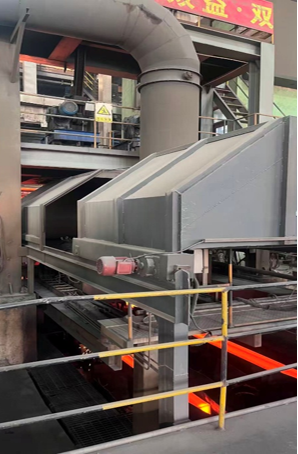
AOD
Argon Oxygen Decarburization as part of our controlled refining capability for selected alloy production routes.
From Raw Material to Qualified Shipment.
Vacuum Induction Melting
Controlled melting route for demanding nickel and specialty alloy grades.
Electroslag Remelting
ESR remelting supports improved cleanliness and material consistency.
Hammering
Mechanical working breaks down cast structure before further forming.
Forging
Heated metal is forged into bars, billets, rings and custom shapes.
Hot Rolling
Selected rolling operations are supported by qualified processing partners where required.
Heat Treatment
Solution annealing and age-hardening routes are applied according to grade requirements.
Cold Drawing & Finishing
Cold drawing, peeling and machining prepare material to required dimensions and finish.
Testing, TPI & Shipment
Final verification, witness inspection, packing, sample retention and shipment support.
VIM + ESR for Most Alloy Materials.
Vacuum Induction Melting is used to control alloy composition and reduce contamination during melting. Electroslag Remelting is then used for most alloy materials to further refine the ingot and support demanding quality requirements.
Additional refining routes may be used where appropriate. The production route is selected according to alloy grade, specification and end-use requirements.
This allows production planning to reflect chemistry, cleanliness, mechanical property and downstream processing requirements.
Structure, Shape and Mechanical Performance.
Break Down Cast Structure
Mechanical working prepares ingots for subsequent forming and supports structural refinement.
Bars, Billets, Rings & Custom Shapes
Hot forging is used to shape material while improving grain flow and material integrity.
Partner-Supported Where Required
Selected hot-rolling operations are completed with qualified processing partners rather than being presented as fully in-house.
Solution Annealing & Age Hardening
Controlled heating and cooling are used to achieve target microstructure and mechanical properties.
Cold Drawing & Dimensional Control
Cold drawing and finishing support tighter dimensions, surface condition and downstream fabrication.
Custom Finished Components
Machining support is available for semi-finished and finished alloy components based on drawings and specifications.
ISO 9001 · CNAS · PED
Three independently verifiable credentials support quality-system review, accredited testing and pressure-equipment material approval. Confirm the document scope, material and inspection requirements for your order.
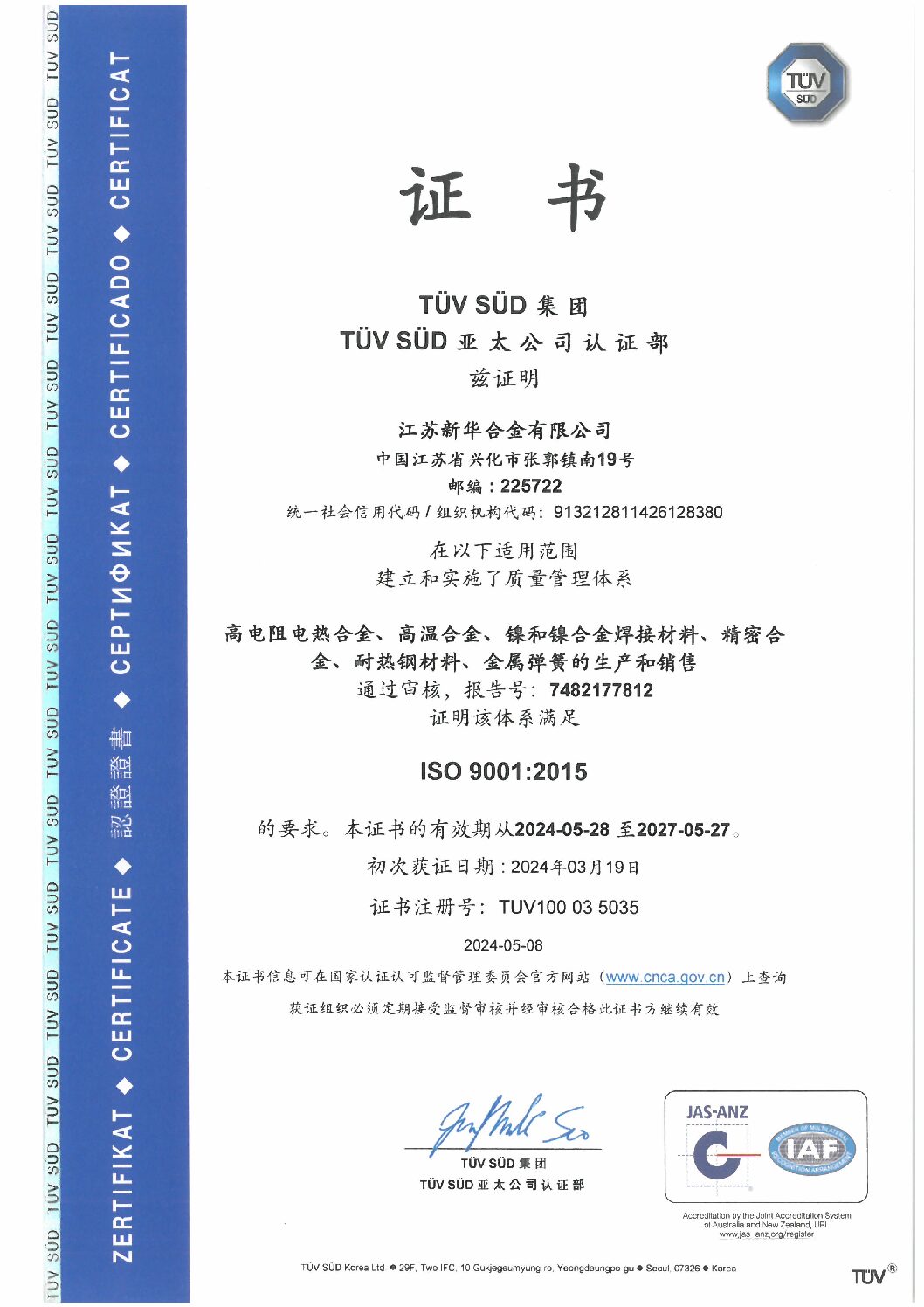
ISO 9001:2015
Holder: Jiangsu Xinhua Alloy Co., Ltd.
Registration: TUV100 03 5035
Valid to 27 May 2027
View certificate information →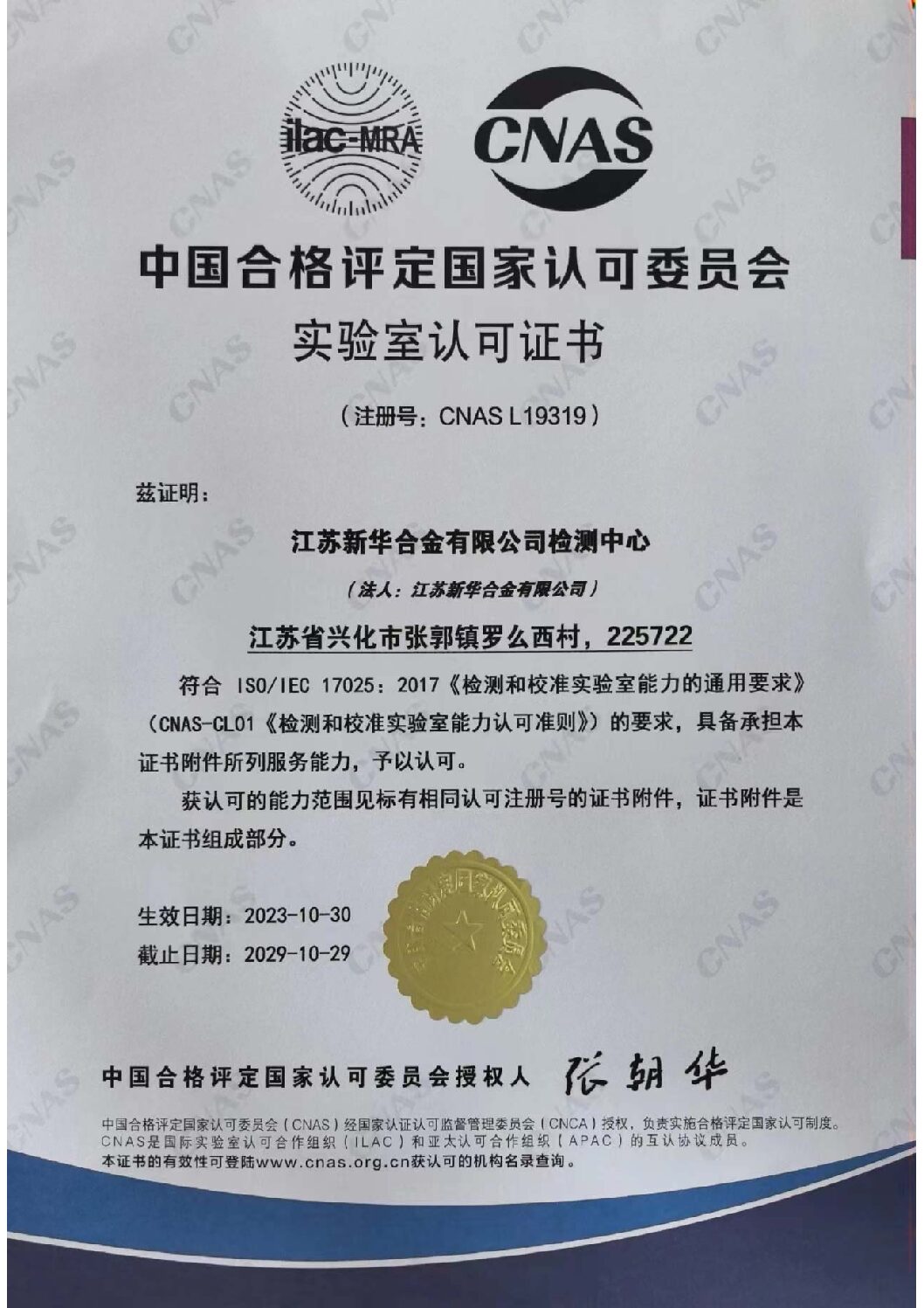
CNAS L19319
Holder: Jiangsu Xinhua Alloy Co., Ltd. Testing Center
Basis: ISO/IEC 17025:2017
Valid to 29 October 2029
View certificate information →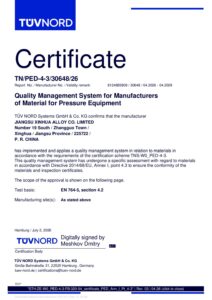
PED 4.3 / 2014/68/EU
Certificate: TN/PED-4-3/30648/26
Issuer: TÜV NORD Systems GmbH & Co. KG
Validity: April 2026 – April 2029
Download PED certificate · PDF ↗ISO 9001, CNAS and PED address different certified scopes. CNAS-accredited claims apply only where the ordered test falls within the approved scope; PED approval is reviewed against the specified material and product form.
Verification from Chemistry to Final Dimensions.
Testing and inspection are integrated into the production workflow, with inspection plans aligned to the material specification, purchase order and project requirements. Our testing and inspection support covers chemical and mechanical verification as well as non-destructive and corrosion-related checks where specified.
General production and order-specific inspection can include PT, UT, thickness measurement, surface checks, IGC, hydrostatic testing, PMI and other verification where specified. CNAS-accredited claims are limited to the testing scope formally covered by CNAS L19319.
Penetrant Testing
Ultrasonic Testing
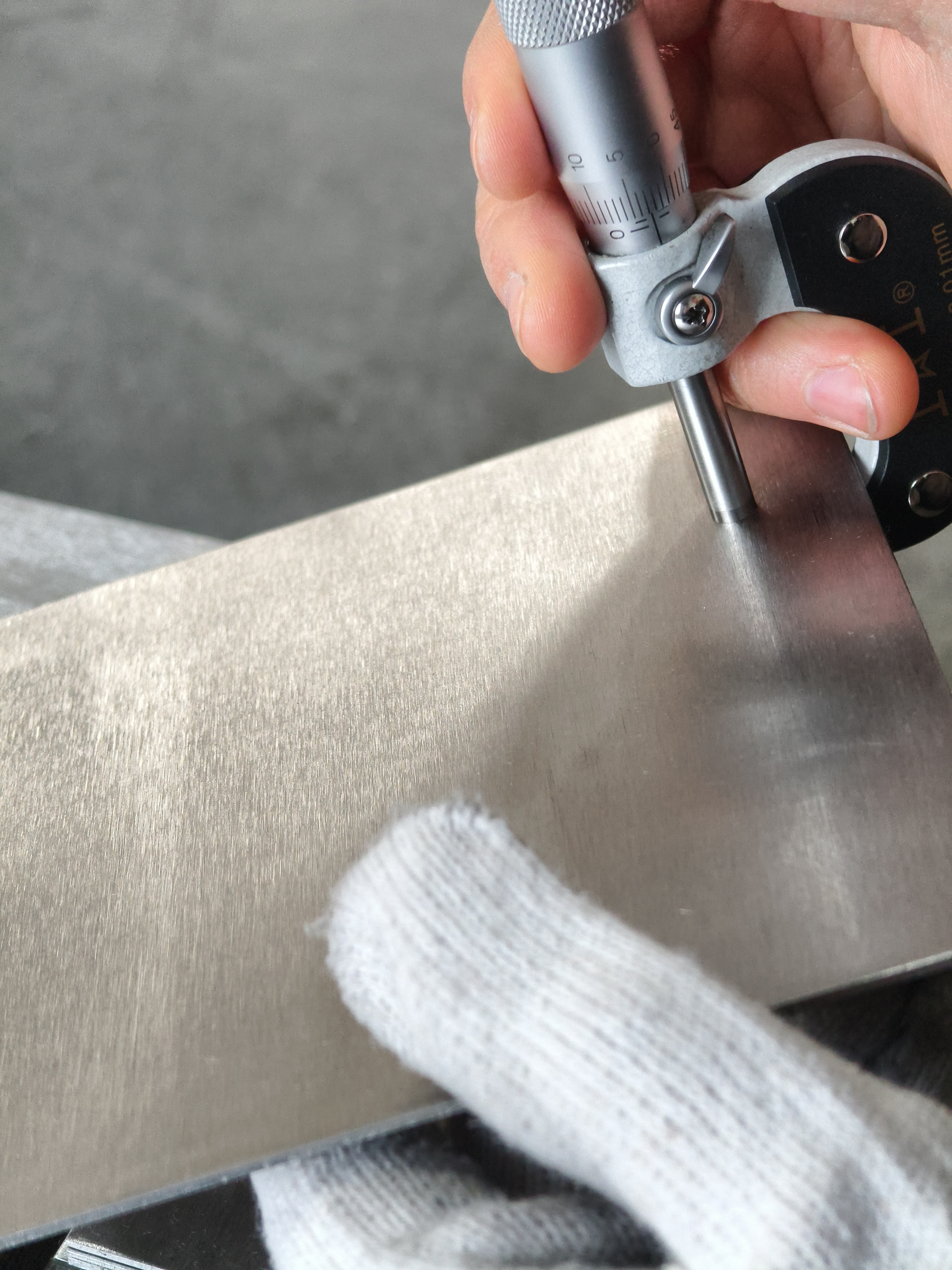
Dimensional Verification
Tensile & Hardness
Intergranular Corrosion
Impact Testing
Metallographic Evaluation
Alloy Composition Analysis
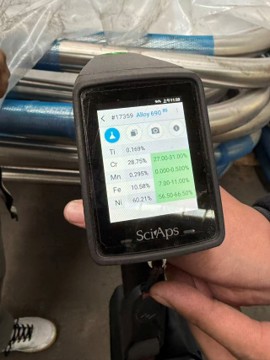
PMI and order-specific inspection records are used alongside chemistry, dimensional, mechanical and NDT checks to verify material identity and conformance before release. The exact inspection route is defined by the purchase specification and project requirements.
Alloy Bar Inspection Before Shipment
Every batch of alloy bars is checked against our quality-control checklist before shipment. These photographs document visual inspection, dimensional checks, PMI verification, non-destructive testing and sample preparation. The inspection scope and acceptance criteria are defined by the material specification and purchase order.
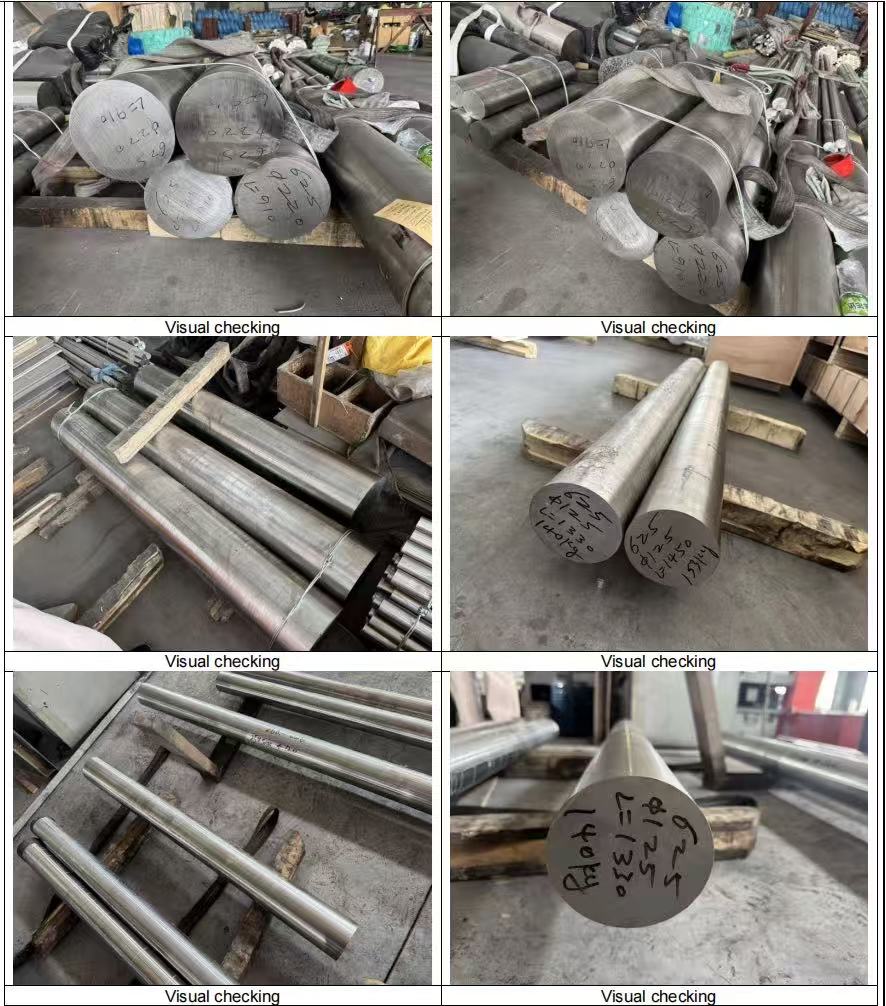
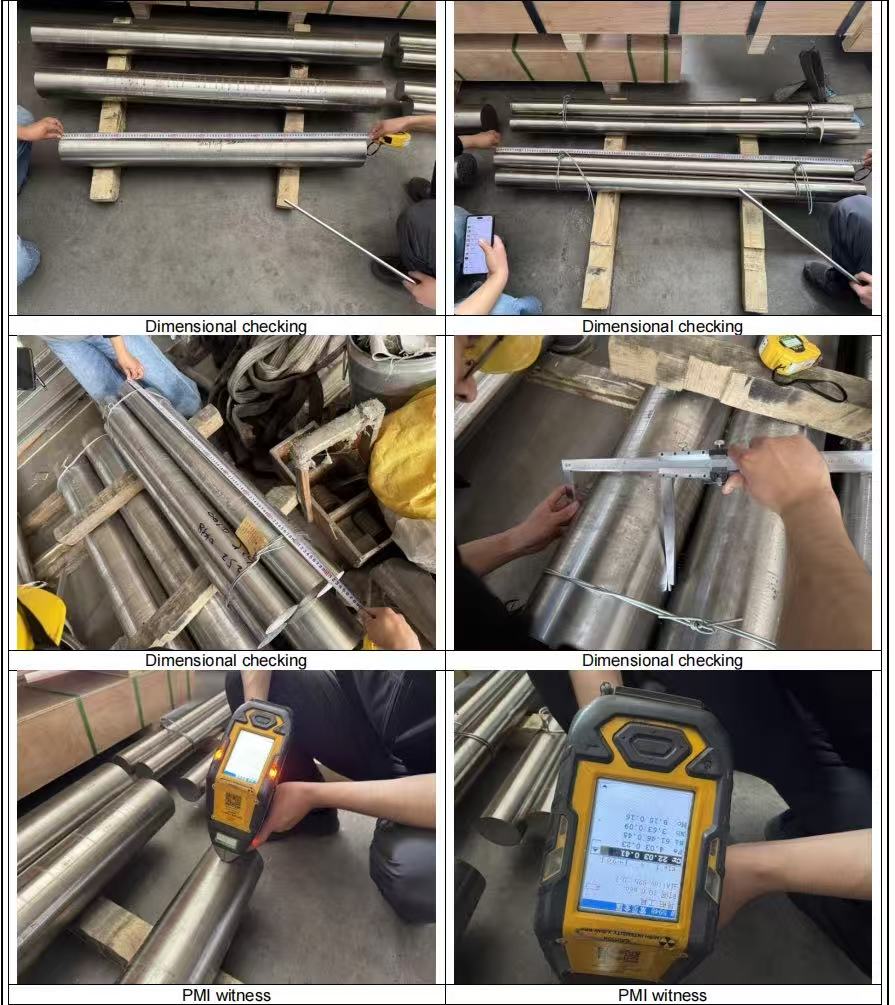
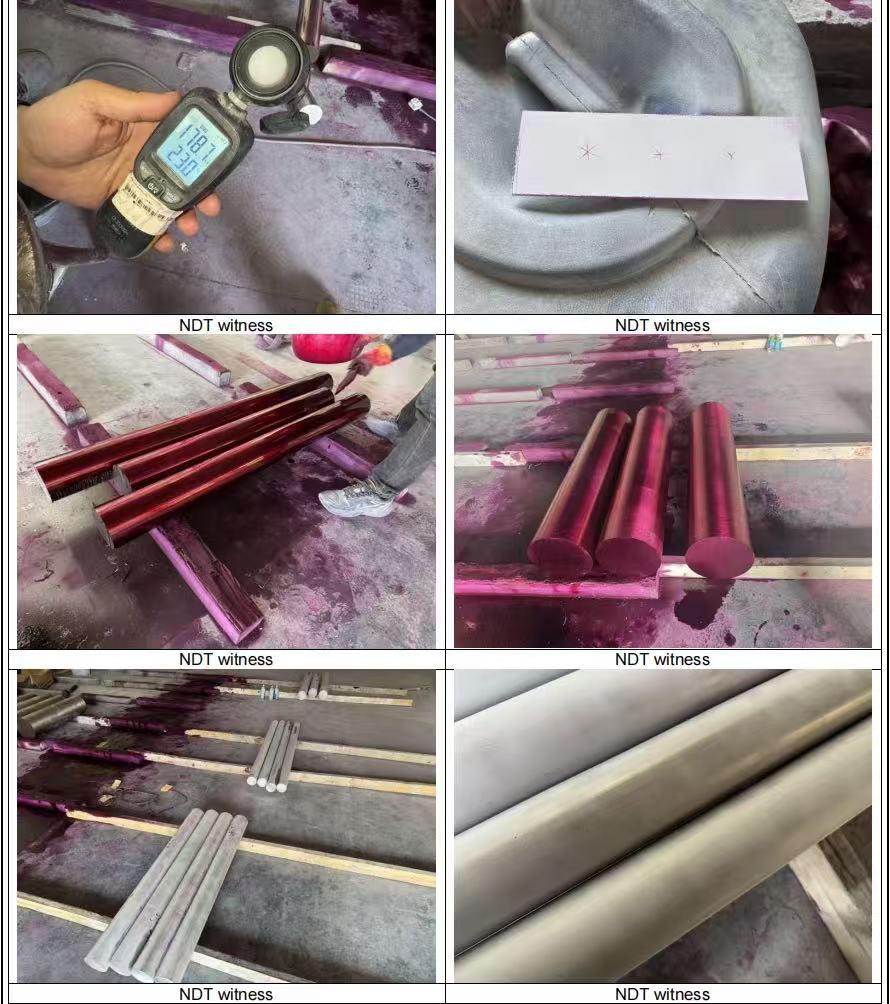
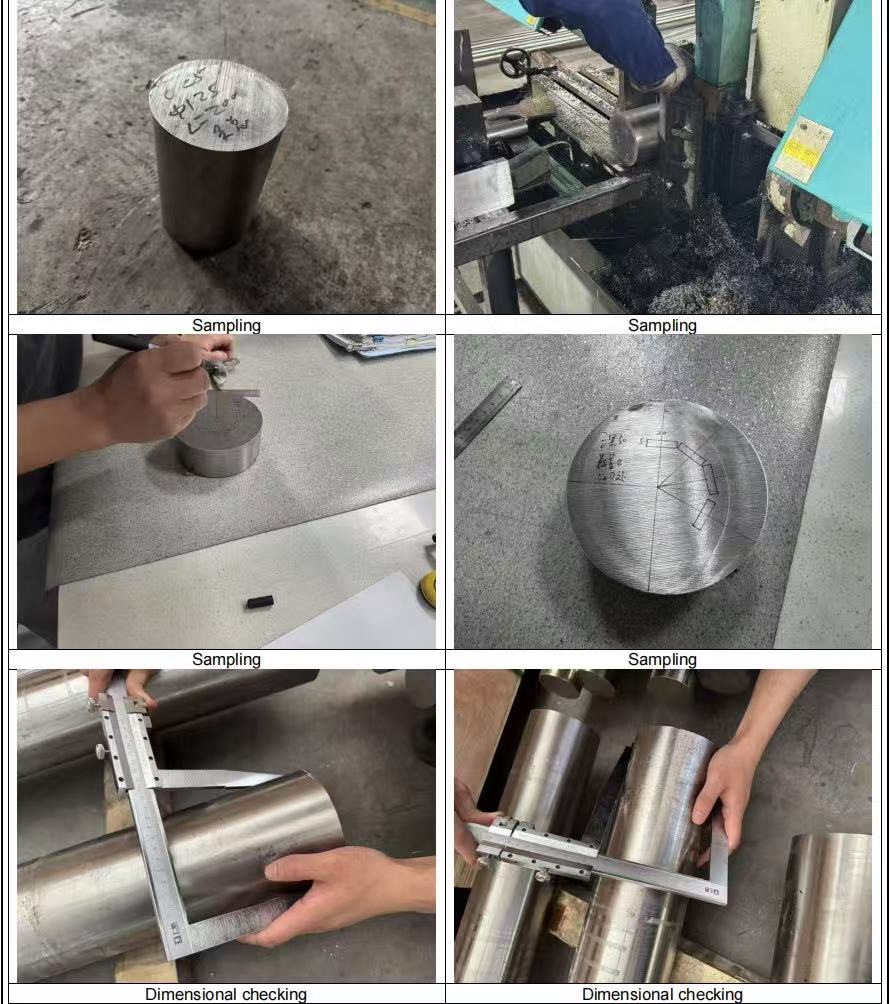
Select a photograph to view the complete inspection record.
Quality Credentials You Can Review.
Our manufacturing quality system, accredited testing capability and pressure-equipment material approval are presented as separate, verifiable credentials. Certificate copies and applicable approval scope can be provided for project review.
ISO 9001:2015
Jiangsu Xinhua Alloy Co., Ltd.
Registration: TUV100 03 5035
Valid to 2027-05-27
Manufacturing quality management system certified by TÜV SÜD.
CNAS L19319
Jiangsu Xinhua Alloy Co., Ltd. Testing Center
ISO/IEC 17025:2017
Valid to 2029-10-29
Accredited testing scope is applied only where the order and test fall within the approved scope.
TÜV NORD PED 4.3
Certificate TN/PED-4-3/30648/26
Validity: 2026.04 – 2029.04
Directive 2014/68/EU, Annex I, 4.3
Quality management approval for pressure-equipment materials, including nickel and nickel-alloy product forms within the approved scope.
Inspection Support for International Projects.
Third-party inspection and witness activities can be coordinated when required by the customer or project. EN 10204 Type 3.1 and 3.2 inspection documentation can be supported according to the order requirements.
CNAS-Accredited Testing Center
Jiangsu Xinhua Alloy Co., Ltd. Testing Center
Registration: CNAS L19319
Accredited to ISO/IEC 17025:2017
Effective 2023-10-30 · Expiry 2029-10-29
The accredited scope includes nickel-based alloy chemical analysis, room- and elevated-temperature tensile testing, Brinell and Rockwell hardness, impact testing, average grain size, nonmetallic inclusions, and superalloy banding grain / primary carbide distribution testing.
PT, UT, thickness measurement and IGC shown above describe available inspection support and are not presented here as CNAS-accredited items unless specifically covered by the applicable accredited scope.
View Quality Documents →TÜV SÜD ISO 9001:2015
Jiangsu Xinhua Alloy Co., Ltd.
Registration: TUV100 03 5035
Valid 2024-05-28 · 2027-05-27
Certified scope covers manufacturing and sales of electrical heating alloy, high-temperature alloy, nickel and nickel-alloy welding materials, precision alloy, heat-resistant steel and metal spring.
Certificate & Download Center →Final packing and shipment are coordinated with export documentation and destination requirements.
Manufacturing Support Across Multiple Product Forms.
Our capabilities support standard and custom supply across nickel alloys and specialty alloys.
Bar, Rod & Wire
Round bars, forged bars, rods, wire and related long-product forms.
Sheet, Plate & Strip
Flat products for corrosion-resistant, high-temperature and fabrication applications.
Pipe & Tube
Seamless and related tubular products for heat exchangers, process systems and industrial equipment.
Rings & Custom Forgings
Forged rings, blanks and custom forms based on drawings or technical requirements.
Fittings & Machined Parts
Elbows, tees, reducers and precision-machined components according to specifications.
Nickel Alloy Welding Wire
Specialty welding materials for fabrication and repair of corrosion-resistant alloy systems.
Common Questions from Engineering & Procurement Teams.
Do you use VIM and ESR for all materials?
For most alloy materials, VIM + ESR is the preferred melting route. Additional refining routes may be selected where appropriate, depending on the alloy grade and specification.
Is every production step performed in-house?
Core manufacturing capabilities include melting, forging, heat treatment, finishing and testing. Qualified processing partners are used where required for selected operations such as hot rolling.
Can you manufacture according to customer drawings?
Yes. Custom forgings and machined parts can be reviewed against drawings, material grades, standards, dimensions, quantity and inspection requirements.
Can third-party inspection be arranged?
Yes. Third-party inspection or witness activities can be coordinated with organizations such as SGS, TÜV or Bureau Veritas when specified.
Have a Grade, Drawing or Project Specification?
Send your material grade, standard, dimensions, quantity, inspection requirements and required delivery. We will review the manufacturing route and supply plan.